
Open Access in Philosophy
In the German-speaking area, the development of open access in philosophy is characterised by remarkable diversity – both substantively and institutionally. Different philosophical schools of thought each have their own publication cultures, forms of communication, and reputation economies. One constitutive element of the engagement with open access in philosophy is philosophical reflection itself. Here, both epistemological and ethical dimensions play a role: Questions regarding the accessibility and availability of knowledge, scientific justice, and responsibility towards the public are negotiated. And last but not least, the societal and epistemological implications of digitalisation processes are discussed. Developments such as data tracking or the use of artificial intelligence in research raise fundamental questions that are reflected on a substantive level in the discipline. Further discussion points are the evaluation systems and metrics in scholarly publishing. In philosophy, there are critics of the Journal Impact Factor – its relevance for the culture of the discipline has been fundamentally called into question.
Despite these debates, there is little systematic, empirical evidence to date regarding the concrete implementation and spread of open access in German-speaking philosophy. An initial overview of the situation can be provided by analysing the positions of relevant stakeholders. The professional societies in German-speaking philosophy, for example the German Society for Philosophy (Deutsche Gesellschaft für Philosophie, DGPhil), the German Society for Analytic Philosophy (Gesellschaft für analytische Philosophie, GAP), the German Society for Phenomenological Research (Deutsche Gesellschaft für phänomenologische Forschung, DGPF), and the German Society of Aesthetics (Deutsche Gesellschaft für Ästhetik, DGÄ), have not yet taken a definitive stance on the UNESCO Recommendation on Open Science (UNESCO, 2021), the position papers of the European Union, or reform papers on research evaluation (see Policy Positions). The GAP linked Nicola Mößner and Klaus Erlach’s position paper on scientific publishing and the evaluation of scientific expertise (Mößner & Erlach, 2024), describing it as “a starting point for further discussion” (Announcement 28.02.2024). Regarding the colour spectrum of open access models – especially the trend towards diamond open access – it remains to be seen what positions German-speaking philosophy will take in the long term.
Open Access Journals in Philosophy
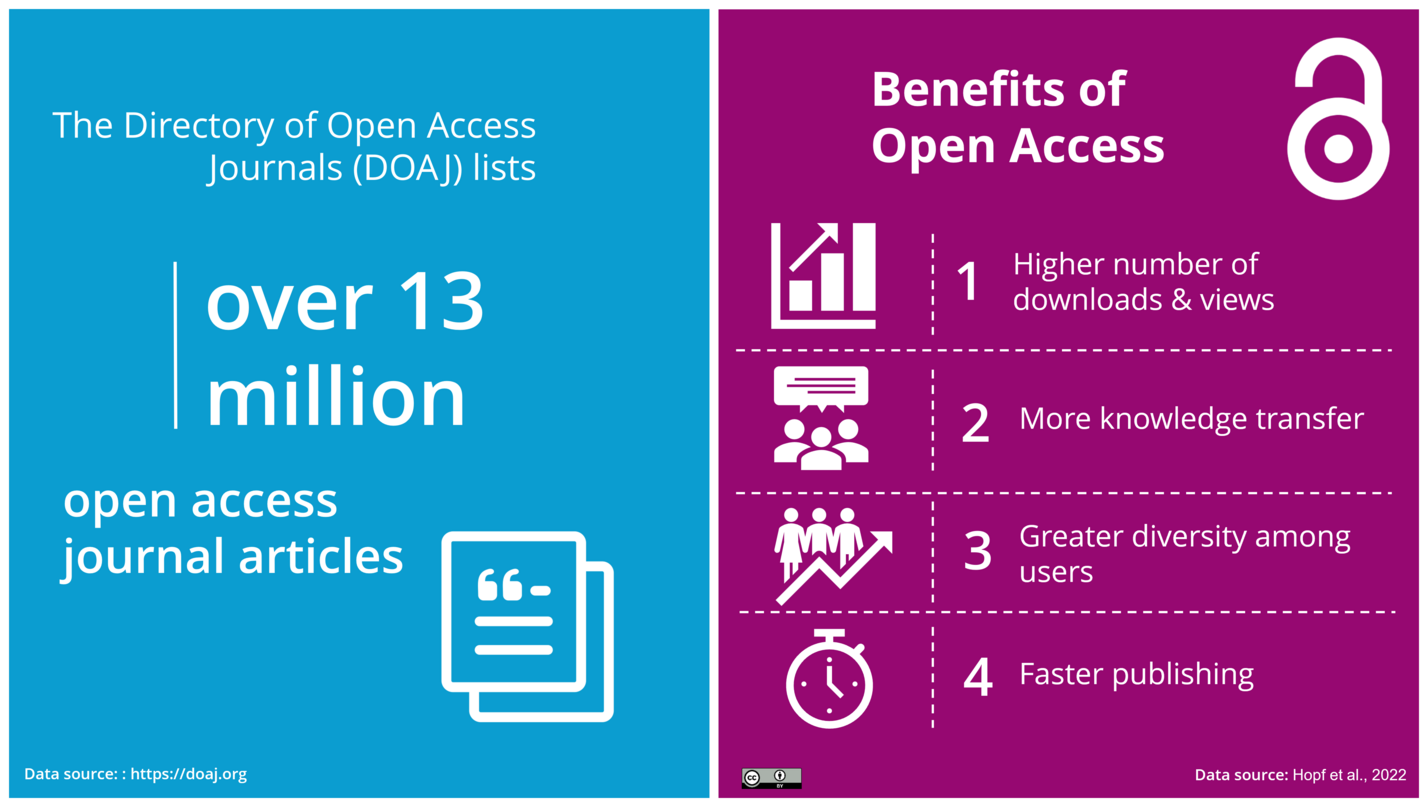
As of May 2026, the Directory of Open Access Journals (DOAJ) listed 413 entries in the philosophical subcategories of the category Philosophy, Psychology, Religion.
In scholarly communication in philosophy in the German-speaking area to date, journals play an important but less dominant role than in the anglophone world. Furthermore, the importance of journals depends strongly on the respective philosophical discipline. In Germany, many long-established journals still use the subscription model. Examples include the Deutsche Zeitschrift für Philosophie, Philosophisches Jahrbuch, the Zeitschrift für philosophische Forschung, and the Allgemeine Zeitschrift für Philosophie. Many of these journals have close ties to large scholarly publishers, which has so far hampered a complete transformation to open access. Cooperations between philosophical societies and publishers also contribute to this structure. The journal Information Philosophie, which ceased publication in 2022, is now accessible free of charge on the PhilPortal.
Nevertheless, in recent years there has been a growing number of newly established philosophy journals that are open access from the start. Examples include the journals Philosophy & Digitality and Philosophy of AI as well as the interdisciplinary journal HannahArendt.net. The Specialised Information Service for Philosophy (FID Philosophie) supports such initiatives with its own hosting service for existing open access journals or open access journals that are in the process of being established. Besides the technical infrastructure, it provides advice and support with long-term visibility and indexing in relevant directories. Further support services, for example editorial training or help in developing open access strategies, are currently being developed.
The German Society for Philosophy (DGPhil) provides a good overview of existing open access journals in philosophy. The linked overviews are based on automated data queries to the Electronic Journals Library (EZB) and the Directory of Open Access Journals (DOAJ). Note, however, that newly established journals are included in the DOAJ at the earliest after one year and that not all open access journals have been indexed to date in the DOAJ or the EZB.
Source: Becklas Dorow, C., Hauss, J. (2026). Funding Open Access Articles – What Are the Options?. Technische Informationsbibliothek (TIB), open-access.network. https://doi.org/10.5446/73596 (CC BY 3.0 DE)
Open Access Books
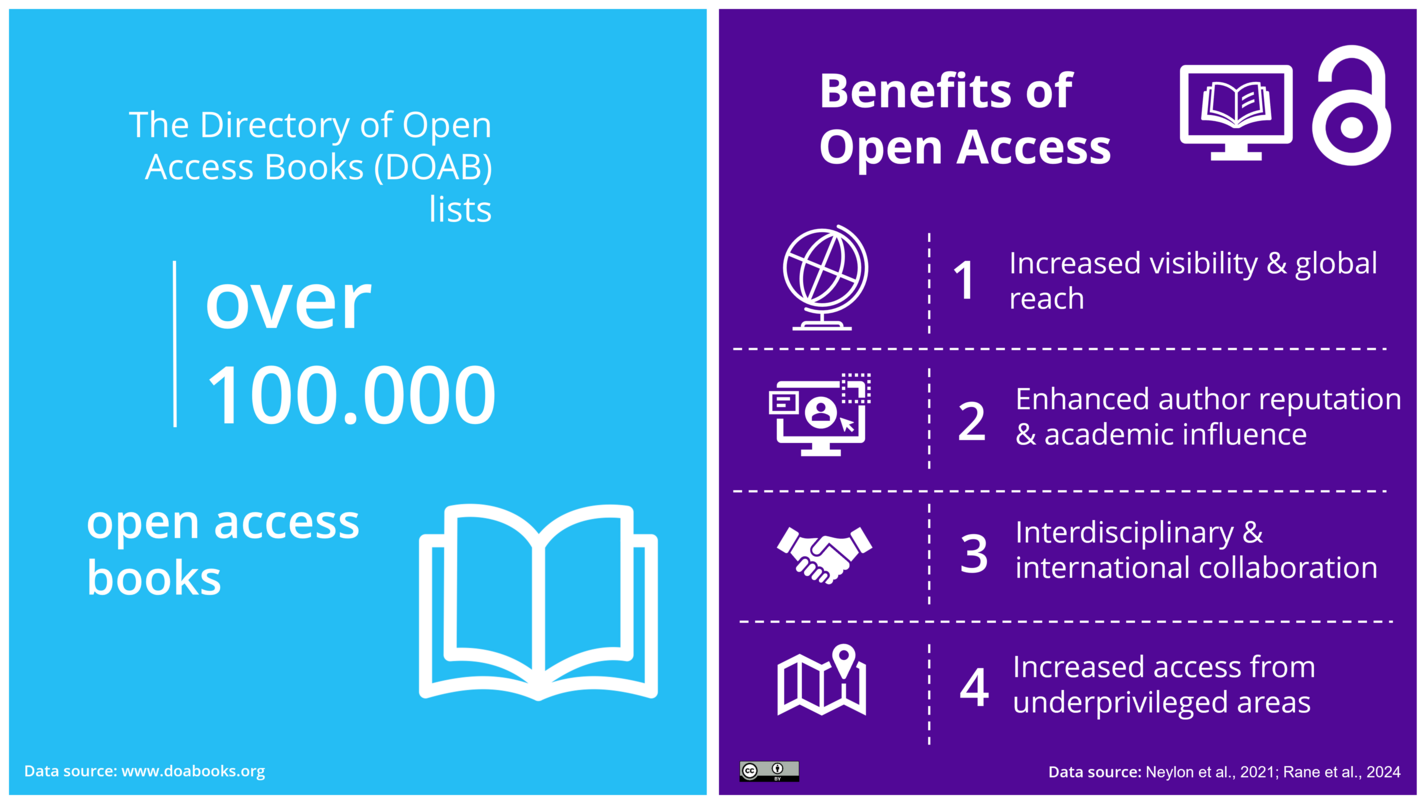
Monographs remain a core medium of scholarly communication in philosophy – especially in the German-speaking area. Results of the PALOMERA project underscore the special importance of the book market for open access transformation in the humanities. Even though there is still room for improvement in terms of the implementation status, there are a number of committed initiatives that aim to initiate a sustainable open access transformation in philosophy (see Mößner & Erlach, 2024).
Most publishers in philosophy have not yet embarked on the transformation. The publisher Transcript offers a number of open access titles that have been transformed to open access either by the authors themselves or by consortia. In cooperation with the Specialised Information Service for Philosophy (FID Philosophie), the publishers Karl Alber, Transcript, and Logos have transformed a number of titles to open access. Open access books can also be found in the Directory of Open Access Books (DOAB) and the Open Research Library.
Disciplinary Repositories
At present, there is no disciplinary repository in German-speaking philosophy. The most frequently used repositories are PhilArchive and the repositories of the respective libraries. BASE (Bielefeld Academic Search Engine) can be used to search the repositories; PhilArchive is also integrated in the PhilPortal search. Zenodo and GitHub are also used, especially on the threshold of the digital humanities.
Video über das Zeitveröffentlichungsrecht
Quelle: Brinken, H. (2020). Finanzierung von Open-Access-Artikeln, open-access.network. https://doi.org/10.5446/49536 (CC BY 3.0 DE)

Open Science in Philosophy
The question of how to handle research data has now arrived in philosophy, where it is the subject of lively debate. Within the National Research Data Infrastructure (NFDI) cosmos, the consortia Text+, NFDI4memory, and NFDI4culture are particularly relevant. For example, Text+ is currently building a Registry for (digital) editions, which is already integrated in PhilFinder. Text+ also provides lexical resources and text collections. Another important point of contact is the DGPhil working group Philosophie der Digitalität, in which diverse projects on the topic are discussed. For example, PhiWiki, a semantic wiki software application for philosophy scholars, has its origins in this working group.
Other Offerings
With B!son (Bibliometrisches und Semantisches Open Access Recommender Netzwerk), TIB – Leibniz Information Centre for Science and Technology and University Library and the Saxon State and University Library Dresden (SLUB) provide a tool that helps authors to find suitable open access journals for their manuscripts by entering textual data (e.g. manuscript title and abstract). Retrodigitised works also a play major role in philosophy. However, a unified directory of such works is still lacking. Open access digital editions can be found in the Registry of the NFDI consortium Text+. The editions are also linked under the corresponding authors in the Specialised Information Service for Philosophy’s search tool PhilFinder.
Practical Tip
Finding Open Access Literature (in German)
References
- Mößner, N., & Erlach, K. (2024). Elektronisches Publizieren und Bewertung wissenschaftlicher Expertise. https://doi.org/10.5281/zenodo.10948472
- UNESCO. (2021). UNESCO recommendation on open science. https://doi.org/10.54677/MNMH8546
Content editors of this page: Dr Malte Dreyer, University of Göttingen, and Eric Eggert, University of Cologne/Specialised Information Service for Philosophy (Last updated: May 2026).