
When publishing or contributing to open access journals, academics have to navigate several challenges. Dom Ford, a postdoc at the University of Bremen, is significantly involved in two Diamond Open Access journals: He is the managing editor of gamevironments and also serves on the editorial board of Eludamos: Journal for Computer Game Culture. In this conversation, we invite him to share his experiences with us, seek his advice, and explore the crucial role of libraries in supporting Diamond Open Access publishing.
Carolin Becklas [CB]: Dom, could you please introduce yourself and your field of research and also, of course, your journal?
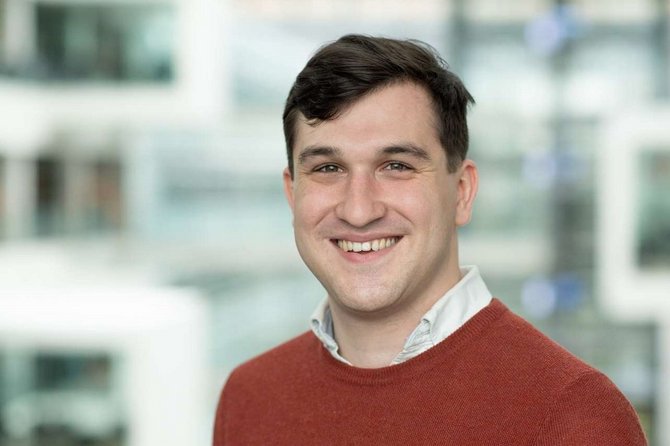
Dom Ford [DF]: My name is Dom and I'm a postdoc at the University of Bremen. I'm working on community formation in games. I investigate how communities in and around digital games are formed, negotiated and maintained. I'm moving a bit into the process of reality formation in general as well. I work with two diamond open access journals. The main journal is gamevironments, which is hosted here at the University of Bremen. Editors in chief are Kerstin Radde-Antweiler from the University of Bremen and Xenia Zeiler from the University of Helsinki. The journal focuses on value formation in games and situating games within the broader sociocultural media environment, like saying games are inextricable from this kind of broader environment. The other journal I work on is called Eludamos, which focuses even more broadly on games and culture in general. It's run by Holger Pötzsch from the UiT, the Arctic University of Norway and Kristine Jørgensen from the University of Bergen. I'm the managing editor of gamevironments, so I kind of have a much more involved hands-on role in running that journal.
CB: Tell us a bit about your background and what led you to your current role in scholarly publishing.
DF: As you can probably hear, I’m a native English speaker and you know, that's always been something I've been interested in. I studied English literature to a master's level. I did a lot of proofreading and copyediting and copywriting and all the editorial stuff. And so it was like a natural role that led to that. When being in academia I was looking for these projects that I want to get involved with, I often just found it was journals. So first, I joined Eludamos in 2020. Kind of a pandemic project, getting this journal up and running again after a bit of a hiatus period. It was really interesting to see behind the curtain of that whole thing. You see the submission of the paper, work with it throughout the entire process until it's published, and then people start citing it and using it. That's a really satisfying process. When I was applying for jobs after my PhD, I was interested in this postdoc position here in Bremen because part of the role was to become the managing editor for gamevironments. The position would allow me to continue this work alongside my research. I wouldn't say I fell into it - there was definitely intention there. It's just one of those ways that I can contribute in academia with all the voluntary extra service stuff that we all have to do as part of academia. You know, you find the bits that you really enjoy doing and that gives you purpose. And so, this is the kind of role that I found myself gravitating towards.
Our authors never have to stop and consider “where will I get the funding to publish this?” or “how will I be able to afford the article processing charge?” “Will people be able to read my work?” Or even other ethical questions like “who is profiting from my work?” “Do I want them to profit from my work?”
- Dom Ford
CB: The “voluntary extra service” leads me to my next question: Many journals often rely on subscription fees or article processing charges to cover their costs, but you chose to run the journal gamevironments open access, and also diamond open access, which means that your readers and your authors do not have to pay for reading or publishing. Why was that important to you and how does this affect authors, readers and also of course, the journal’s sustainability?
DF: There are definitely pluses and minuses to that. I think for me it's really important to allow the freest flow of knowledge and academic debate. Our authors never have to stop and consider “where will I get the funding to publish this?” or “how will I be able to afford the article processing charge?” “Will people be able to read my work?” Or even other ethical questions like “who is profiting from my work?” “Do I want them to profit from my work?” And so, from the publishing side of it, it allows academic work to just be at the heart of it, which idealistically is a really nice principle to have. Authors are not jumping through additional hoops and readers don't have to pray either that their library has institutional access to the journal or they don't have to risk these illegal methods of getting the articles. Because let's face it, no one actually pays out of pocket for a journal article. It means that on both sides of that, people just don't have these barriers or hoops to jump through to produce or access this academic knowledge.
We also don't have to worry about profit models and stuff like that. We're not for profit. We only care about covering our running costs. Everything else can just be about the actual editorial and academic work. The downside is that without the extra revenue that would come from article processing charges, diamond open access journals are almost always a volunteer run. Occasionally, we can find funding to pay for copyediting and stuff like that. But basically it's volunteer run. This has some advantages, but it can lead to issues in terms of workload. Everybody is doing this on the side of their other, usually academic, jobs like teaching and research. And then in addition to that, you need to be doing all this journal work, which means that sometimes you can't prioritise the journal work or things get delayed. So, you have to push the journal because you're not getting paid for it. If you are working for one of the big publishers or something like that, then that is your job. And so that's your primary responsibility. So it means that usually diamond open access is a bit slower and more prone to things knocking publication off course. Things can come up. From the editors to the reviewers as well, no one's getting paid, so it sometimes will be downgraded in terms of priority.
CB: You were already mentioning libraries. I was wondering how librarians and libraries can assist or support these publishing initiatives?
DF: We're quite lucky with both of these publications that they are supported and funded by the libraries. University libraries often have some kind of publishing platform, where you can apply to start a journal with them. If they support the idea, then all your running costs are covered and they provide technical support, like a content management system, for instance. Libraries are essential for this kind of publishing model,so we're very lucky to have these institutions who get this budget in order to help out these publications.
CB: Diamond open access journals are often seen as a more community driven and decentralised approach to scholarly publishing. How far does this affect your journal’s community of authors, reviewers, readers and also funders?
DF: It's a primarily volunteer driven organisation, a community thing, rather than a business venture. The editors start the journal and work on it because they think it's important work. Reviewers review for us because they want to support this work. Writers write for us because it's free and maybe because they support the journal's work, and readers actually read the articles because they're free. I think also, increasingly, academics are pushing back against the profit motive of the giant academic publishers. You increasingly hear about reviewers refusing to review for profit making publishers or saying: Okay, if you're making a profit, then you have to pay me for my review.Sometimes it’s difficult to get reviewers because, again, it's volunteer work and everybody is overworked and has a ton of things to do. Generally, reviewers are happier to review for open access journals.
What helps with that is that funding bodies often require people to publish open access.Once we can cover our running costs, it becomes all about the academic community debate and discussion. Gamevironments has a special issue every year so we can focus on questions like “who do we want to work with in that special issue? What kind of topics do we want to approach?” We don't have to think about aspects like “does this fit in with our business model? Is this financially sustainable?” and so on. With Eludamos, we can move into doing stuff like doctoral consortiums, which we've been doing quite a lot at different conferences recently, and we're going to continue this initiative because it just means that we as a journal can get more involved in the community. It just embeds the journal in the community more, both in terms of its principles and practicality, like getting volunteers for reviews.

CB: I would like to ask about a different topic: In the past years, AI, especially ChatGPT, of course, has really emerged as a hot topic in academia and also non-academic fields. How has AI transformed or influenced your work and managing gamevironments?
DF: It hasn't yet. I'm sure it will, but technology is not good enough yet to, for example, have someone just tell ChatGPT to produce an article for gamevironments and then for us to not be able to see. I don't think the technology is there yet. It probably will be, so it's definitely something that we keep an eye on. It is important to say, though, that in general, AI is already involved in the academic publishing and writing process, since word processors like autocorrect features, grammar checking, word suggestions in Microsoft Word and stuff like these are all AI machine-learning features that support the process of academic publishing. But going forward, we need to think about what our relationship is with it. What are the ethical ramifications? We sign up to these COPE ethical publishing guidelines - is there any guidance coming from them about how we are supposed to think about this and how we should deal with these potential cases? So I'd say AI has not transformed anything yet.
I think that open access is a hugely important thing. So like I was saying earlier, sometimes there are requirements from funding bodies to publish open access. But even if there aren’t, it's just some advice I got earlier in my career: always publish open access, even if it's less prestigious.
- Dom Ford
CB: My last question: What advice would you give to scholars and librarians interested in either starting a journal or contributing to existing ones? And how important is it that a publication is open access?
DF: I think that open access is a hugely important thing. So like I was saying earlier, sometimes there are requirements from funding bodies to publish open access. But even if there aren’t, it's just some advice I got earlier in my career: always publish open access, even if it's less prestigious. Because no one reads stuff that's not open access, especially at smaller universities that don't have access to all the major publishers. You know, if you look up an article that sounds like it could be useful, but then it's behind a paywall there is a 90% chance that you're just going to close the tab and forget about the article when there is so much research out there. Every additional barrier means you're going to lose a bunch of potential readers. Then you also, of course, have principles. I personally don't want to be giving money if I can help it to Elsevier and the big publishers. You have to be careful, of course, because some countries, for example, use points based systems for their publications. These point based systems are arbitrary, right? They often get built on prestige and how “good” the journals are or whether they are indexed in Scopus and Web of Science. Big publishers can easily afford to go through these processes. But when this is volunteer work, it's a bit slower to get into those things, so scholar-led diamond open access journals may be ranked lower than others in such points based systems. That's where I can totally understand why, like the practicalities of being in an academic career can overtake those principles. But I think that in principle, it's just so much nicer to have your work open access. So, I would strongly advise contributing to open access journals if you can. That's a personal priority to me. I try to only publish open access.
I'm moving now to starting a journal. The good news is that it's relatively easy to do. Once you cover the running costs, you don't need to worry about a lot of things. If your institution’s library provides publishing services, you can get a journal running relatively quickly. And then you have the whole content management system that's already there for you. People underestimate how much work it is to go through all of these different systems like Scopus and also then to make sure you know what all the ethical guidelines are. You're then putting yourself in a position of responsibility within the academic community: You are responsible for publishing people's work. You are responsible for not publishing works that is plagiarised work, that is harmful, work that is kind of misinformation, work where the data has not been collected in ethical ways and all of these different considerations. That comes with a lot of different processes you need to look into. I think a really good way before you start your own journal is to get involved with other ones. Be on the editorial team of another journal. Usually they're happy to have people help out. Usually you get to those positions by reviewing and doing good reviews. If you are someone who is thinking of starting a journal, you need to either have a permanent position yourself or you need to get the support of someone who has a permanent position to ensure continuity and sustainability. Apart from that, I would say contributing to open access journals is a really good way of supporting these ventures and contributing to academic discourse and knowledge production. It's also a really good way of networking. Working with editors in chief are maybe big names in your field can be really valuable by itself, especially for a more junior scholar. It can be a really good way of getting more embedded in the academic community of your field.
CB: Dom, thank you so much for sharing your experiences and insights with us today. I learned a lot.
DF: Thank you for having me. It's been really fun.
Zitiervorschlag
Becklas, C., & Ford, D. (2023). Open Access Level-Up. Ein Gespräch mit Dom Ford über den Betrieb der Diamond-Open-Access-Zeitschriften gamevironments und Eludamos. open-access.network. doi.org/10.64395/t4e1q-dt467.
Dieser Beitrag ist lizenziert unter der Creative Commons Namensnennung 4.0 International Lizenz (CC BY 4.0).


