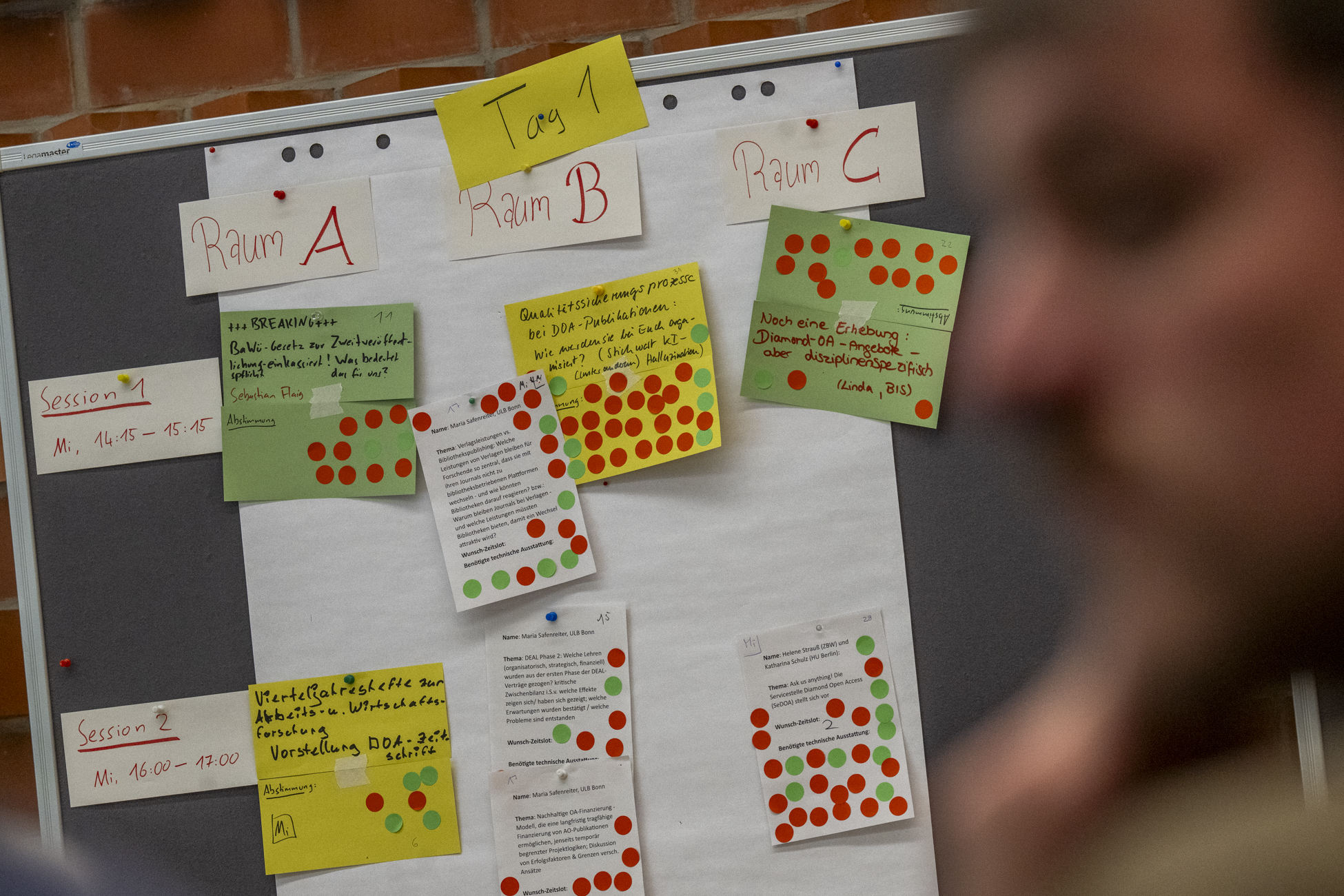
The Open Access Barcamp 2026 took place on 29 and 30 April 2026 at the Library and Information System (BIS) of the University of Oldenburg. Sebastian Flaig reports on the event from the perspective of an open access newbie.
Mini-Conference in Northern Germany
“For the catering, we could offer kale tea.” At the latest, when these words were uttered during one of the first preparatory meetings, it became clear that by choosing Oldenburg, we had set the Open Access Barcamp in the very heart of Northern Germany – namely, in the Kohltourhauptstadt, or kale tour capital. Luckily, or perhaps unfortunately, they stuck to coffee and ordinary green tea (without the kale). And also in other respects, it was more about the further development of the scholarly publishing system than about the green superfood.
For me personally, the barcamp was a first. After just two months’ professional experience in the area of open access, I was not only participating for the first time in an in-person event on open access. I was also experiencing my first ever barcamp – both as a participant and as organisational support for my colleague Karin Stork, who, together with the friendly BIS team, was responsible for preparing and implementing the event. Although I was involved as a student assistant in organising last year’s Open-Access-Tage in Konstanz, at that event I was occupied more with handing out name tags and posting signs to the event facilities than with participating in current debates on open access.
Compared with a “classic” conference with a minutely planned programme, the barcamp format seemed unusual to me at first. There is no fixed agenda, but rather all participants can suggest topics that currently interest them and briefly pitch their suggestions for sessions to the other attendees. The participants then decide together which sessions to include in the programme. In the run up to the event, I was still sceptical whether this concept would actually work and whether there would be enough topics. However, my concerns soon proved unfounded. The open access community contributed so many ideas that Karin and I had our hands full when planning the sessions during the lunch break. In the end, some suggestions had to be combined so that as many topics as possible could be included in the programme.
Valuable Practical Insights
For the first time, the Open Access Barcamp had a thematic focus: diamond open access. Nevertheless, other open access topics were also welcome. Thus, the programme included, among other things, a workshop on communication strategies and a round-table discussion on the decision of the Federal Constitutional Court on the secondary publication obligation in Baden-Württemberg, which had been published only the previous day.
Of the diamond open access topics, I found the practice-oriented sessions especially exciting. Presentations covered, among other things, the diamond open access journal Vierteljahreshefte zur Arbeits- und Wirtschaftsforschungand the open access offerings of the Specialised Information Service for Educational Science and Educational Research (FID Erziehungswissenschaft und Bildungsforschung), which include, for example, the publication platform OpenJournals@Fachportal-Pädagogik. These insights in particular helped me to see how the concepts and models that I encounter in a more theoretical way in my everyday work (e.g. flipping or consortial funding) are put into practice.
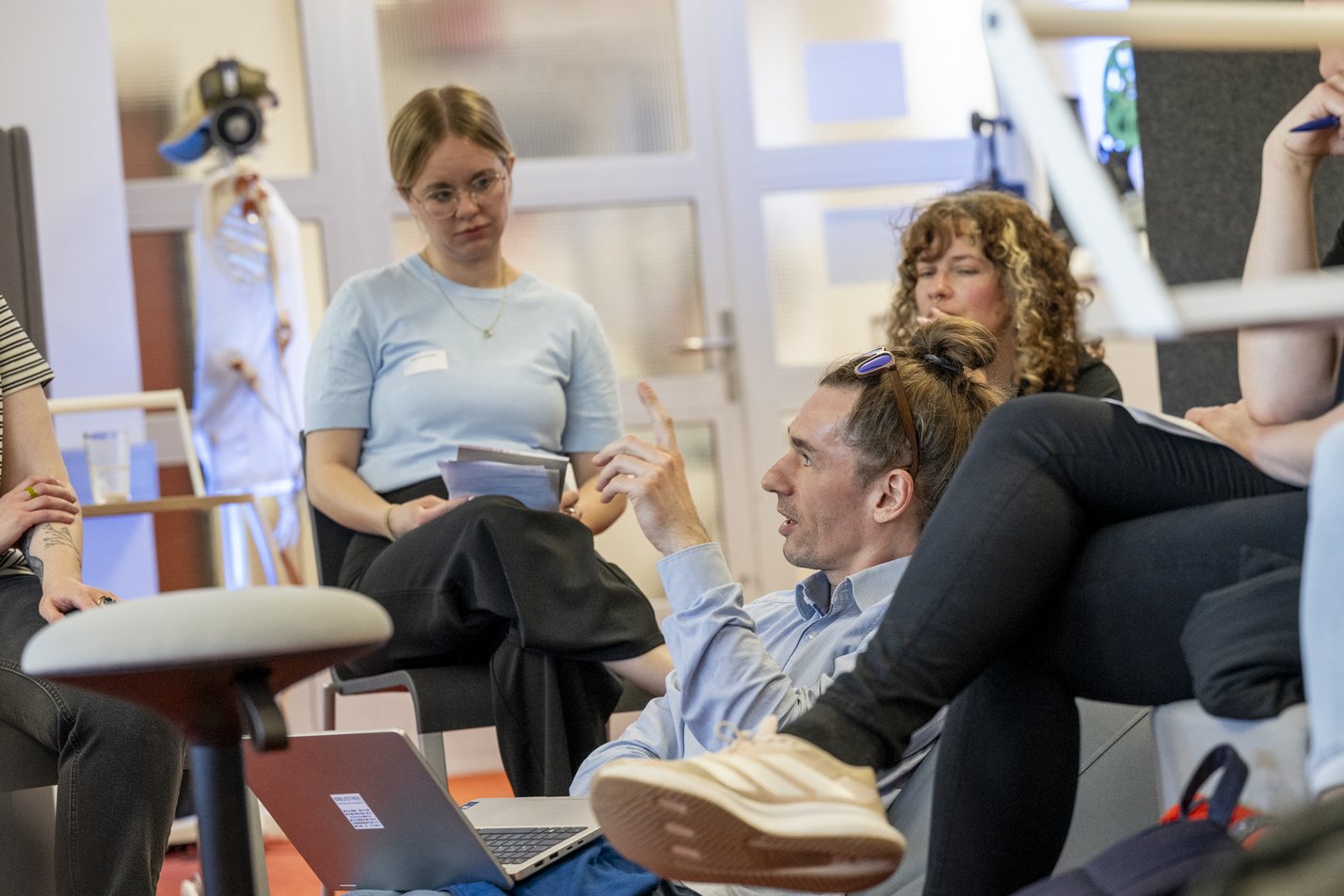
In addition, the fact that the groups were small made it easy to ask a lot of questions – especially the supposedly stupid ones. I quickly realised that that is precisely where the strength of the format lies: the focus is on open exchange, irrespective of prior experience or level of knowledge. Unfortunately, I was unable to attend another session in which this guiding principle took centre stage, namely, the presentation of the National Service Centre for Diamond Open Access (SeDOA), which included a round of questions. However, judging from the many adhesive dots that the proposed session received when participants were voting for their preferred topics, it generated a great deal of interest.
My Own Sessions: Karlsruhe and Stage Fright
However, there was a good reason why I missed the round of questions on SeDOA and many other exciting sessions (including one on quality assurance against the backdrop of AI): Besides the two practical sessions, I had prepared two programme items. Thus, all four session slots were already fully earmarked, and I quickly learned an important barcamp lesson: At such events, you always have more interests than time … .
One of my own sessions was devoted to the aforementioned highly topical decision of the Federal Constitutional Court on the secondary publication obligation in Baden-Württemberg. The idea for the session arose spontaneously on the train journey to Oldenburg. As the press release had just been published, there was little time to prepare the session, and the discussion remained just as open. Nevertheless, it was exciting to jointly consider what consequences the decision might have for the open access community and whether it could provide in the long term an impetus for a federal provision. After all, the principal guardians of the constitution in Karlsruhe noted in their decision that with its current provision, the State of Baden-Württemberg had encroached on the legislative competence of the Federation.
My second session dealt with another highly topical development: the European publishing platform Open Research Europe (ORE). From autumn 2026 onwards, ORE will be opened to researchers from 11 European countries. This will significantly enlarge the group of persons eligible to publish via ORE, which will no longer be restricted to researchers from EU-funded projects, but will include all researchers from countries, including Germany, that support the platform organisationally and financially.
As information on this innovation was sparse at the time of the barcamp, interest in the session was correspondingly strong. After a brief presentation, we discussed inter alia the question of whether ORE can be considered a diamond open access offering – specifically, whether the financing and organisational support by scientific (funding) organisations such as the German Research Foundation (DFG) or the Austrian Science Fund (FWF) already satisfies the criterion “scholar led”. We also discussed whether ORE, with its open peer review, could even be an attractive alternative to established publishing venues, which have impressed researchers primarily with their reputation, Impact Factor, and visibility in the scientific community.
I was very positively impressed by the pleasant atmosphere in which these discussions unfolded. Despite a certain amount of stage fright and my comparatively brief experience in the area of open access, I didn’t feel that I didn’t know enough. That’s what makes barcamps so special: To participate in the discussion on an equal footing, you don’t have to be an expert with years of experience. Different perspectives are expressly welcomed –even those of greenhorns like me.
Networking, Library Tour, and Pizza Soup
This openness was apparent not only in the sessions themselves but also in the side events. The impromptu networking on the first day offered an excellent opportunity to talk with one another. Participants with different professional experience were specifically paired to exchange views on the challenges in everyday open access life or share their own paths into the area of open access.
I also made intensive use of the coffee breaks and the optional joint dinner for conversations – especially with other young professionals with similar questions and insecurities to mine. In doing so, I quickly realised that barcamps are above all a place for networking within the open access community. It is amazing how many contacts, ideas, and possible cooperations can arise within just two half days.
Last but not least, the outstanding support provided by the BIS colleagues contributed to the thoroughly positive impression. Whether visitors were searching for their jackets, or additional pins were needed at short notice – the administration office team was available and helpful at all times. What I also found particularly remarkable was the interest shown by many library staff members who, although not themselves working directly in the area of open access, nevertheless took an active interest in the event and participated in individual sessions. The side events, with tours of the library, the Carl von Ossietzky exhibition, and the interactive Learning Lab, were highlights in themselves.
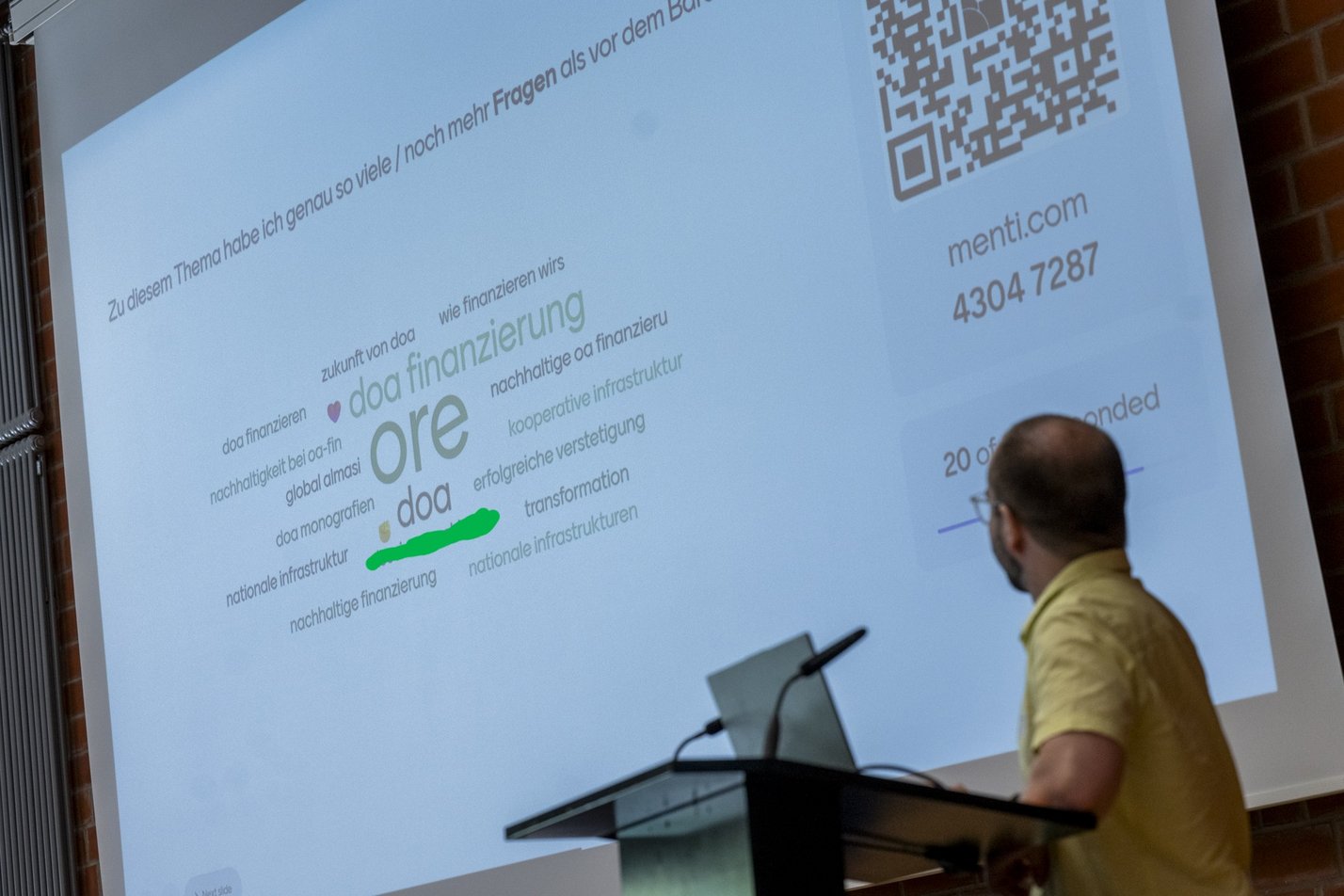
At the end of the barcamp, a Mentimeter poll gave participants another opportunity to look back: What did they learn most about – most frequent answer: ORE; what did they still have the most questions about – most frequent answer: again, ORE; and what culinary catering speciality tasted best – most frequent answer: pizza soup. However, I couldn’t but wonder whether the result would have been different if kale tea had been offered after all.
Suggested Citation
Flaig, Sebastian (2026): Open Access Barcamp 2026 – Impressions of an Open Access Newbie. open-access.network. DOI: 10.64395/thv21-s7r91
This article is licensed under the Creative Commons Attribution 4.0 International Licence (CC BY 4.0).

