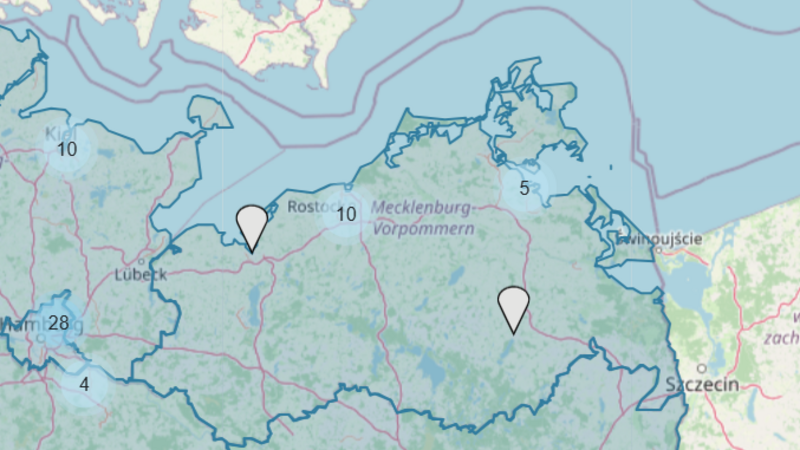
With the adoption of a state-wide open access strategy (in German), Mecklenburg-Vorpommern is making a clear commitment to open science. The aim is to make scientific findings, research data and digital cultural assets permanently freely accessible and reusable – for science, society and the economy. The strategy was developed by the Ministry of Science and Culture in collaboration with the State Rectors' Conference and is part of the digital transformation in the state's scientific sector. It is based on federal and state guidelines as well as international initiatives such as the Barcelona Declaration on Open Research Information.
Open access as standard
At the heart of the strategy is the establishment of open access as the standard for scientific publishing. Public research should be freely accessible wherever possible. Universities, libraries and scientists are supported in publishing their publications with open licences and making full use of existing legal options, such as the secondary publication right. Particular attention is being paid to the expansion of repositories, advisory structures and an information budget to finance publication costs.
Focus on diamond open access
A central component of the strategy is the promotion of diamond open access publication models. These enable free publication for authors and readers alike. They operate independently of commercial publishers and are supported by scientific institutions, professional associations or library consortia. The state provides financial support for the development of and participation in such science-based infrastructures. Universities should actively recognise and promote collaboration in diamond OA journals – for example, as a research or transfer service.
Open science as a guiding principle
In Mecklenburg-Vorpommern, open access is seen as part of a comprehensive understanding of open science. The strategy therefore also promotes the provision of open research information, open educational resources (OER) and the digitisation and free access to cultural heritage. One planned step is the establishment of an open science service centre, which will provide advice throughout the state – particularly on legal issues relating to licences, research data management and OER. The implementation of the strategy will be supported by a state working group on open access and will be evaluated regularly until 2030. In the long term, the state aims to integrate this with a comprehensive open science strategy.
Further information
- Read the press release from the Ministry of Science and Culture here (in German):
https://www.regierung-mv.de/Landesregierung/wkm/Presse/Pressemitteilungen/?id=213109&processor=processor.sa.pressemitteilung - You can download the open access strategy for Mecklenburg-Vorpommern at the following link (in German):
https://www.regierung-mv.de/serviceassistent/_php/download.php?datei_id=1681491