
Open Access in Theology
In contrast to religious studies, theology examines religious convictions and practices mainly from an internal, denomination-based perspective, combining them with scientific methods and standards. Theological research is conducted both at academic institutions and in faith communities and encompasses methodologically diverse, historically diversified sub-disciplines such as biblical studies, church history, and systematic and practical theology.
The theological community is very heterogeneous – there are research and publication overlaps, for example, with history, literary studies, classical studies, and linguistics, as well as with sociology, philosophy, and religious studies. Within this community, open access publishing and self-archiving are growing in importance. There are reservations or concerns about open access, especially regarding reputation losses, additional costs, and additional editorial work. These are traditionally addressed by maintaining close ties with scholarly publishers and using established publishing models. However, early-career theologians are also trying to establish alternative and/or scholar-led publishing cultures, whose reputation can now be considered well established.
For the most part, open access publishing can be characterised as a recognised publishing model in theological research – albeit one with room for growth. In particular third-party-funded projects have a cost advantage here, as funding recipients are usually granted an allowance to cover the costs of publishing open access. As theological research is funded mainly by general-purpose and budgetary funds, it is sometimes disadvantaged because of high APCs for open access journal publications compared with APC-free closed access publications.
The relevance of open science and open access in theology has been addressed within the discipline (Chang-Wae Kim & Faßnacht, 2026; van Oorschot & Krüger, 2024). In the theological community, the pros and cons of open access have certainly also been considered against the backdrop of shrinking student populations and target audiences (Baumgartner, 2026, Dahlke, 2026) or a theological-ethical imperative to publish open access (Sultanik, 2023). One challenge in this regard is the historically and denominationally highly fragmented publishing landscape in theology, which also varies geographically in terms of distribution and substantive focus. In light of ongoing secularisation in the German-speaking area, there is, if anything, an oversupply of publication organs and publishers, which are increasingly coming under pressure, both in terms of relevance and of costs. The added value of open access results primarily from the wider distribution and increased international and social visibility of results of theological research and the facilitation of denominational and disciplinary exchange. The diamond open access model, in particular, could lead to cost savings.
Given the very diverse and established open access publication channels, in particular in the area of scholarly journals, the reasons for the reluctant acceptance of open access are more likely to be found in the theological publishing culture than in infrastructural obstacles (Baumgartner, 2026). However, in the area of monograph publishing, the cost factor and the assumed reputation of traditional formats are more relevant. In theology, print monographs are far more important than journal articles and contributions to edited volumes.
Open Access Journals
As of July 2026, the Electronic Journals Library (EZB) listed 417 open access journals and 121 diamond open access journals under “Theology and Religious Studies”.
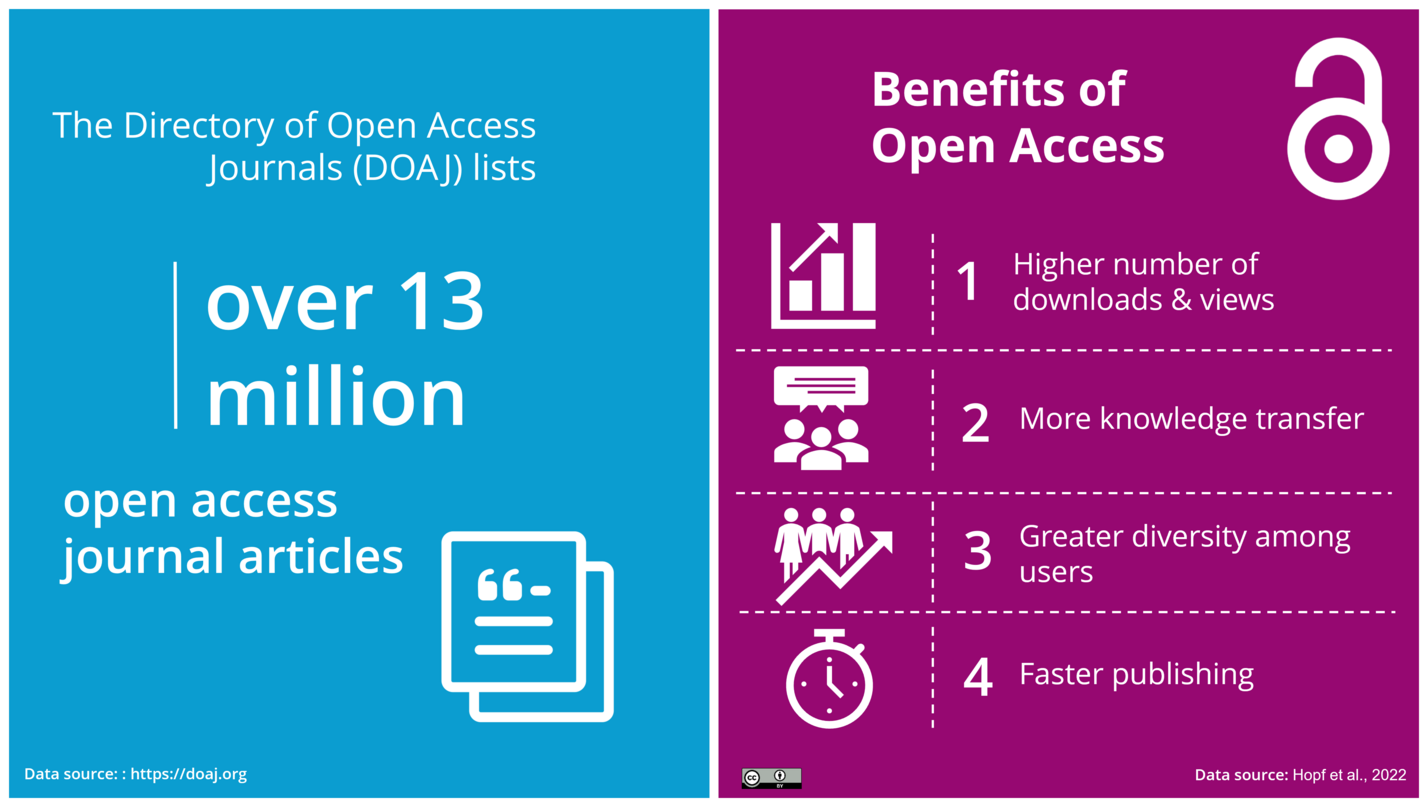
As of July 2026, the Directory of Open Access Journals (DOAJ) listed 104 journals under “Theology”, of which 91 did not levy publication charges. Therefore, a considerable share of open access journals in theology are obviously not indexed in the DOAJ. A compilation of open access journals in theology by Boston College shows a geographically diverse open access landscape.
Major disciplinary and denominational differences are apparent. The larger the denominational community, the more publication organs it can support. European and Anglo-American perspectives also dominate geographically (based on the journal’s/publisher’s headquarters) and linguistically.
In the periodical formats, all types of open access are represented (e.g. gold: Open Theology, International Journal of Systematic Theology; green: Münchener Theologische Zeitschrift, a closed access journal that allows self-archiving after an embargo period of 24 months). The share of diamond open access journals has also increased (e.g. theologie.geschichte, Religionspädagogische Beiträge). As of July 2026, the Diamond Discovery Hub listed 56 theology-related diamond open access journals. The transformation of subscription-based journals to open access can also be observed (e.g. Theologie und Glaube).
Of the approximately 125,000 journal articles listed under “Theology” in OpenAlex in July 2026, some 29% were open access.
Important open access theology journals include:
Source: Becklas Dorow, C., Hauss, J. (2026). Funding Open Access Articles – What Are the Options?. Technische Informationsbibliothek (TIB), open-access.network. https://doi.org/10.5446/73596 (CC BY 3.0 DE)
Open Access Books
Compared with the total volume of publications, the open access rate among theological monographs is still low, depending on the publication type.
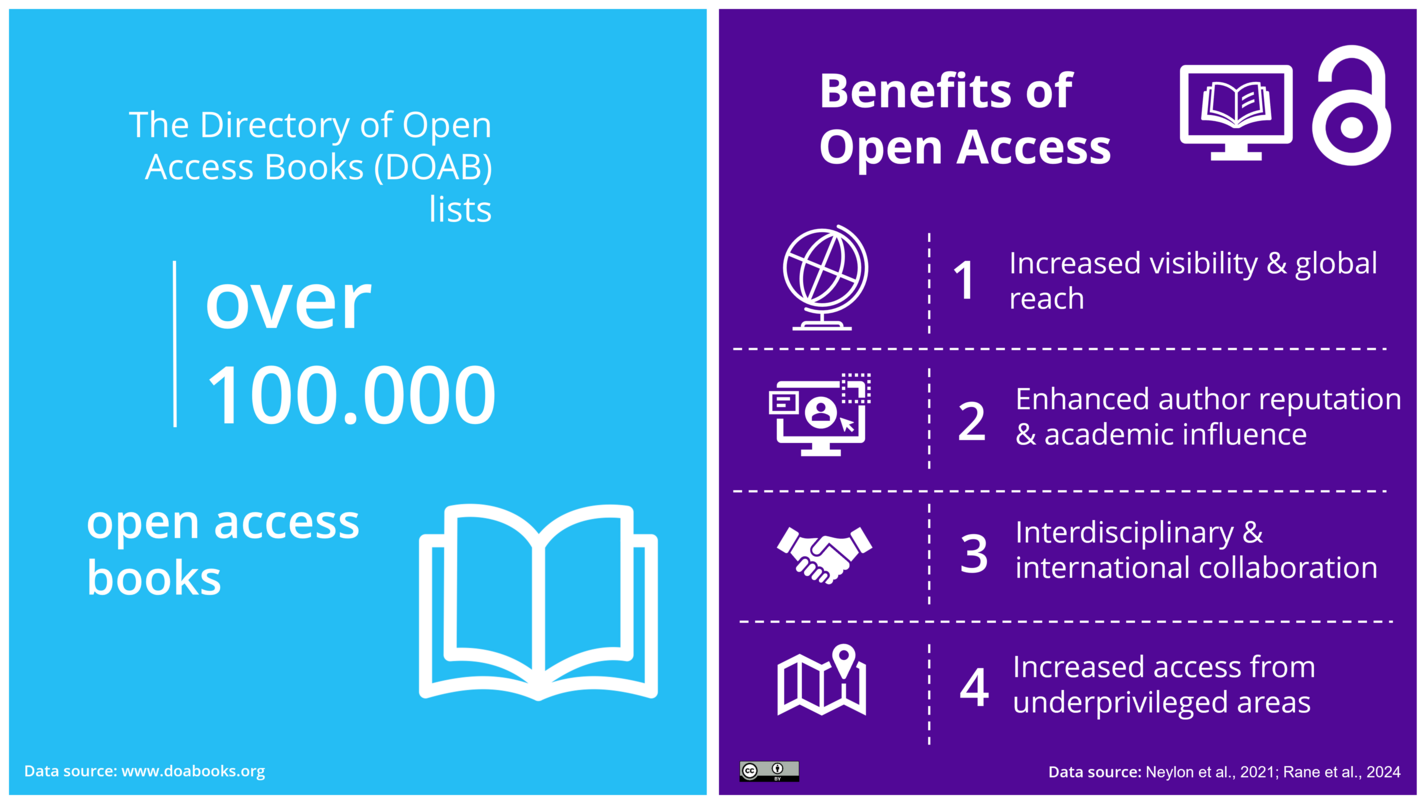
As of July 2026, OAPEN listed 179 entries under “Theology”, and the Directory of Open Access Books (DOAB) listed 182. A search for works in the subject area Theology in the categories “Book” and “Book Chapter” in OpenAlex in July 2026 resulted in around 38,000 hits, with an open access rate of 6.37%. By contrast, of the around 8,400 dissertations listed in OpenAlex in that month, over 52% were classified as open access monographs.
Almost all established publishers in theology offer the option to publish open access (Theologischer Verlag Zürich, Herder, Evangelische Verlagsanstalt, Karl Alber, Cambridge University Press, Oxford University Press, Routledge, Brill, De Gruyter). Sometimes whole series, but often only individual titles, are published open access, and high grants are the norm outside institutional publishing services such as university presses.
Disciplinary Repositories
The Index Theologicus (IxTheo) Self-Archiving Service provides a large disciplinary repository open to all theological researchers. It is linked to a biography of theology and religious studies of the same name. Members of ecclesiastical higher education institutions in the German-speaking area can also avail of the document server KiDokS, a small ecclesiastical repository.
Larger research institutions usually provide institutional repositories for their own members, which can also be used for theological publications. Furthermore, discipline-specific open access databases, such as the Open Access Digital Theological Library, facilitate the search for open access publications worldwide.
And finally, the Registry of Open Access Repositories (ROAR) lists further theology-related repositories.
Source: Brehm, E. (2021). Zweitveröffentlichungsrecht für Wissenschaftler*innen, open-access.network. https://doi.org/10.5446/51789 (CC BY 3.0 DE)
Practical Tip
Finding Open Access Literature (in German)
Other Offerings
Operated by the Specialised Information Service in Theology (FID Theologie) at Tübingen University Library, the international bibliography of theology and religious studies Index Theologicus, (IxTheo), with specialised biographies for biblical studies and church law, is an internationally established and continuously evolving reference and service offering for open access publishing. In addition to indexing and reference services, IxTheo also offers (a) the possibility to publish existing journals open access using the publication management system Open Journal Systems (IxTheo Open Journals); (b) a self-archiving service (IxTheo Open Text); (c) the retrodigitisation of works in the public domain in collaboration with the Specialised Information Service for Historical Studies (FID Geschichte); and (d) an advisory service on research data management. The theoradar database provides a collection and analysis of German-language Christian blogs and podcasts.
Open Science in Theology
In keeping with the open science principle – to have a broad impact on society and provide free and fair access to research for everyone – scholar-led open science projects also continue to emerge in theology. Examples include the open access online lexicon for systematic theology SysLex, the open access lexicon for biblical studies WiBiLex, and the open access lexicon for religious pedagogy WiReLex. Reflections on the scientific-ethical responsibility and positioning of theology in the context of digital methods are frequently initiated (e.g. van Oorschot & Krüger, 2024). The advantages of open educational resources (OER) for the proclamation and transmission of the faith have also been emphasised (e.g. Mößle & Angelina, 2025). In addition, there are also a few targeted projects devoted to promoting and establishing open science in theology, for example the Templeton Foundation’s project Open Science of Religion (see Davis et al., 2026). An overview of examples of OER platforms for educational materials for religious pedagogy is provided here.
As theology is primarily a text-based discipline, theological research data are mainly textual sources. One exception is corpus-based research, for example in the areas of biblical studies or church history. Open science principles may also be of relevance for researchers in subdisciplines in the area of practical theology, which rely in part on empirical research. The Central and University Library of Lucerne has created a template for a data management plan for theology.

Literature
- Baumgartner, D. (2026). Rat- und Tatlosigkeit vor alternativen Publikationsmodellen in der theologischen Forschungskultur. Eine Erwiderung auf Benjamin Dahlke. Münchener Theologische Zeitschrift, 77(2), 248–250. https://doi.org/10.5282/mthz/5576.
- Chang-Whae, K. T., & Faßnacht, M. (2026). Offene Infrastruktur für Theologie und Religionswissenschaft im Kontext von Open Science und KI. In F. van Oorschot & C. A. Nunn (Eds.), Kompendium Computational Theology, Vol. 2: Potentiale Digitaler Forschung in der Theologie (pp. 433–467). heiBOOKS. https://doi.org/10.11588/heibooks.1715.c25602
- Dahlke, B. (2026). Der Theologie gehen die Leser aus - was tun? Auf der Suche nach einer neuen Lern- und Forschungskultur. https://katholisch.de/artikel/67454-der-theologie-gehen-die-leser-aus-was-tun
- Davis, E. B., LaBouff, J. P., van Elk, M., & Ladd, K. L. (2026). The Open Science of Religion Initiative in the psychology of religion and spirituality. Psychology of Religion and Spirituality, 18(2), 161–165. https://doi.org/10.1037/rel0000608
- Mößle, L., & Angelina, P. (2025). Fürchtet euch nicht – OER und Third Mission. https://oer.community/third-mission/
- Sultanik, A. (2023). Considerations on how faith affects Christian librarians in providing open access resources. Theological Librarianship, 16(2), 36–38. https://doi.org/10.31046/tl.v16i2.3321.
- van Oorschot, F., & Krüger, F. (2024). Theologie als Open Science? Technische und informatische Perspektiven auf die Schnittstellen von Theologie und digitaler Forschung. Theologische Literaturzeitung, 149(6), 462–480.
Further Reading
- Avery, J M. (2018). The open access availability of articles from highly ranked religious studies journals: A study of ten journals. Theological Librarianship. 11(1), 12–17. https://doi.org/10.31046/tl.v11i1.465.
- Dörr, M. (2018). Open access information service for researchers in theology. LIBER Quarterly, 28, 1–9. https://doi.org/10.18352/lq.10245
- Dyer, R. & Wolfe, B. (2023). Open-access theology: Introducing the St Andrews Encyclopaedia of Theology’s digital publishing model. The Journal of Electronic Publishing, 26(1). https://doi.org/10.3998/jep.4254
Content editor of this page: Dominik Baumgartner, Friedrich-Alexander-Universität Erlangen-Nürnberg (Last updated: Juli 2026).